|
|
|
| ALBUM REVIEWS
SEVEN DAYS Duane
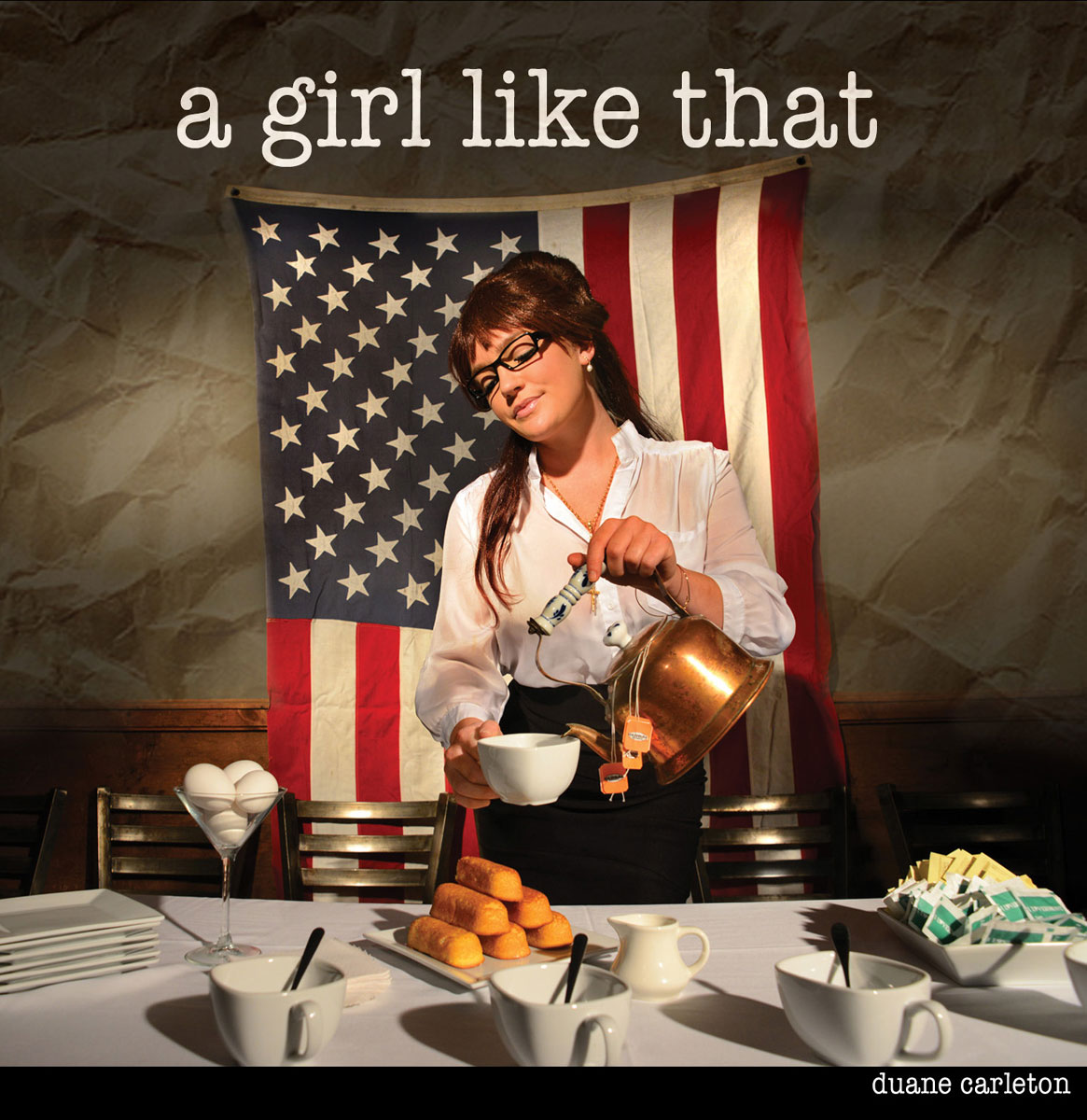
Carleton, A Girl Like That Rutland County rocker Duane Carleton has been cranking out all manner of original electric and acoustic music since the early 1990s. With A Girl Like That — which, if I've counted right, is his 18th recording — he shows no sign of slowing down. Dedicated to the memory of Chris Franco, a beloved Killington chef who died suddenly last year at age 49, the album features 11 original songs loaded with familiar guitar riffs, great vocals and some potential rock anthems. Let's start with the album art. Cover girl Brittany Schuessler sets the scene. The front cover is set in a genre that could be called "cartoon idyllic," with Schuessler done up to look like one of Sarah Palin's soccer moms. The back cover is considerably more suggestive. The music follows suit: There's everything here from sensitive ballads to kick-ass rockers. Carleton is signaling that everything is not necessarily as it appears. The whole shebang needs to be listened to with a sense of humor, tongue firmly set in cheek. Schuessler is featured in some additional entertaining poses on the CD itself, sadly not visible when the disc is playing. The title track leads off the album with a vibe that recalls John Mellencamp circa 1985. And that's a compliment. Carleton knows how to craft classic rock-and-roll songs. Take, for example, "18 Years (and a Moment)," a catchy little anthem that has shades of Tom Petty and Burton Cummings; and "Love and Nothing," one of the album's rare ballads. Both are personal favorites. Carleton's years of experience absorbing and performing great rock music in central and southern Vermont have clearly enriched his songwriting. Carleton is undeniably a solid vocalist and master of many guitar styles. Whether he's doing a short fill riff, chopping away at a catchy funk rhythm, strutting jazzy lines — as in the instrumental "Killing Time" — or taking his Les Paul on a furious tear, the playing is meticulous, muscular and entertaining. Carleton's varied approaches and musical textures include nods to guitar icons from Keith Richards to Duane Allman to Randy Bachman, and he does them proud. Duane Carleton celebrates A Girl Like That with a CD release party at the Pickle Barrel Nightclub in Killington this Thursday, December 18. A rockin' time is guaranteed.
THE
MOUNTAIN TIMES Rockin’
the Region with Duane Carleton
By
Dave Hoffenberg About
three years ago I started this article and my first ever interview was with
Duane Carleton. That’s about how long the process was for Carleton in making
his latest album, “A Girl Like That.” I got to speak to the Local Legend
about the making of this album and then had the honor of reviewing it. “My
goal was to try and take everything up a notch as far as the song writing, the
playing, the production and my singing,” Carleton said. “I really wanted to
take everything to a different level. I also felt that I hit a point
artistically where things were really coming together. Things that had been in
development over my career started to develop into what my musical concept is. I
really wanted to take the musicality up a notch or two.” Carleton
incorporated many local musicians in this recent album. For example, Pickle
Barrel bartender Brittany Schuessler was his cover girl. Carleton said
Schuessler was great and a natural. You can easily recognize Schuessler on the
back cover but I was surprised to learn it was her on the front cover, too. The
two shots are polar opposites of each other. Carleton wanted people to think
about it. Is it yin and yang? Is it before and after? Is it alter egos? You can
decide. Carleton
said the covers are a political statement of their own. He said these days
people are either extreme conservatives or extremely liberal. You’re either
one or the other, there’s no middle ground and that is what he did here. Former
local photographer Vyto Starinskas shot the front and back covers. About two
summers ago, I was there for the early planning stage of selecting the cover
girl and what concept to use. Certain things on the record were balancing karma
to him like how Carleton ran into Starinskas at Walgreens and they got to
talking. Soon after Carleton learned Starinskas was moving away. Carleton knew
that it was meant to be to have him help out. Carleton
said, “He’s a great photographer and he loves rock ‘n’ roll. To have
worked with Vyto artistically is a great privilege on my part. He actually came
up with the idea to use a girl on the cover. I was going to go in a dark
direction but Vyto said using a girl on the cover is inviting and gets people to
want to listen to your record.” Carleton
agreed, deferring to Starinskas’s expertise. Karr Group Creative Director Jess
Gabeler did the album artwork and inside cover photography. “Jess
did a phenomenal job on the graphic design and did the photography on the disc
itself. The inside cover made me think of the last supper,” said Carleton
confirming that that was his idea. There are many things to make you wonder,
like the eggs — there are glasses of eggs in every scene. Carleton said if you
can figure out what it means then good for you. I couldn’t and he wouldn’t
tell me. Jax
bartender Leslie Myers Patenaude makes her singing debut with a couple guest
vocal spots on the albumn. Carleton has been working with Patenaude for many
years now at Jax on Sunday nights. Patenaude kicks off the album with a very
convincing “Listen” shout out. Carleton said the reason he picked Patenaude
was at the end of his shifts on Sunday, she would have to get people to leave.
Carleton said, “It gets to the end of the night and here’s this tiny person
with a big voice saying ‘it’s time to go.’ I thought that would be great
at the beginning of the record kind of like a joke… There are times as a
musician that you feel that nobody is paying attention or listening to you, like
I’m being ignored. I thought how funny is it that the first thing you hear is
someone shouting listen. And not only that but that particular song, ‘A Girl
Like That’, is a political song. There’s a political message there and
it’s specifically aimed at one particular political personality. That seems to
be the nature of the political world now, that whole listen to me. Whether what
you’re saying is legitimate or not.” The
album is dedicated to the memory of Chris Franco who was a long time Killington
friend of Carleton’s and friend of us all. Not many people know this but
Franco did some back-up harmonies on an earlier album of Carleton’s. “I love
the guy and I felt it was totally appropriate to dedicate this to him.” In
addition to those already mentioned, Carleton employs an all-star cast of
musicians including: Jeff Poremski (Bass) and Jerry Dubeau (Keyboards) from his
band The Backwood Messiahs; Tim Lynch (Keyboards) and Bob Boyer (Drums, Vocals,
Bass) who also helped produce it; Georgia Jones (Vocals); Brian Melick
(Percussion); and Russ Lawton (Drums). Carleton
is very pleased with the record. Some tracks that stand out to him are “Keep
on Moving,” which he says is a good representative for the record, “Killing
Time” is a nod to Shawn McKeag, Carleton likes the play on words, “Blood in
the water,” which was inspired by Hurricane Irene and Hurricane Sandy. Carleton
writes all the lyrics and then pieces together a verse, a riff, the chorus.
Since Carleton blew the speakers in his car, he uses that time to work through
things in his head. To some degree Carleton is responsible creatively for
everything you hear on this album. He did a rough demo of all the songs himself,
playing guitar, singing and doing that with a drum machine to get a feel for it. “I
have a fairly good idea of how I want the song to sound,” he said. “Tim, Bob
and I click together well … we all have different areas of expertise. I’m
always willing to try different things,” he added. “A good example is in the
song ‘Keep on Moving,’ there is a breakdown in the middle where you hear the
clinking of glasses. That was Georgia’s idea to have it sound like there was a
party going on. So we did it. It totally worked.” This
is my favorite album to date of Carleton’s. It’s been in my CD player ever
since I got it, playing it over and over. I only took it out to review it. Track
1 is the title track and right off the bat you get this great melody and a great
story. Carleton’s songs are stories and this song is evident of that. You can
feel what he’s talking about. The song has a good vibe. Track
2 “Keep on moving” is by far my favorite track. You have great harmonies and
a great message: Keep on moving no matter what gets you down. That song will
definitely not get you down. It will get you up and moving and grooving. I love
the piano solo, it reminded me of The Radiators and has the New Orleans style to
it. Track
3 “I won’t let Sunday” is a funny title to me because it says I won’t
let Sunday bring me down yet Carleton plays every Sunday at Jax and that’s the
last thing he’s doing is bringing people down. Lots of people look forward to
those Sundays. The song is a mellow groove and Georgia’s back-up vocals and
harmonies are so big in it. She’s a huge force in this album. Track
4 “Out in the wilderness” starts with a different sounding Carleton, maybe
with a different mic but it really grabs you. It starts out mellow and then in
the middle of the song it’s like bam there’s that guitar solo, it’s really
cool. It’s ripping but like a mellow rip. Then goes back to the chorus and
then in the end it says I want you to hear me and fades out on the word ‘me’
for ever. There’s no other band out there that sounds like Carleton’s band
here. Track
5 “18 Years (and a moment)” is an uplifting song. It’s really catchy. Track
6 “Going Hollywood” is a rocking tune. Georgia is back with the harmonies
and backing vocals and there’s a couple guitar solos in there. I love it. Track
7 “Killing time” is definitely a favorite of mine. The song starts off with
a little percussion and drums which are very evident in this song. It’s got an
infectious groove and melody. It’s an instrumental. I love a good jam but this
isn’t a good jam, it’s a great jam. It’s got everything in there with a
little Phish feel and then gets into a Meters feel because it starts funking up.
I didn’t want this song to end. It’s got great guitar solos but keeps coming
back to that great original melody. Track
8 “Love and nothing” is a mellow song with a good message. It says a little
bit of love and nothing gets you by. This song has a lot of love to it. Track
9 “Right before your eyes” has another great lyric which says “There must
be something better and maybe it’s right before your eyes.” I’ll tell you
what should be right before your eyes and that is this album. There’s nothing
better to me right now. This song is so Carleton and what I’ve been seeing of
him for years. It’s just mostly him singing, no harmonies which sounds great. Track
10 “Blood in the water” gets back to the roots of this album. It’s got
great everything, message, melodies, lyrics and harmonies. It’s a powerful
song. Georgia is back and sounds incredible as always. The album ends with a
soulful groove, ‘let’s hold on’. There’s
mellow songs on this album but mellow here for me is I want to just chill and
crank it up. They say to shop local and buy local. Well Carleton did that on
this album. He’s got a bunch of locals involved and he dedicated it to one of
my favorite locals, the late great Chris Franco. It makes me think of him on
that last song because it says “Let’s hold on to each other to make it
through the night.” Everything about this album I like. It starts with Leslie
saying “Listen” and you’re going to and you’ll probably listen to it
over and over like me. It has rock, jam, soulful grooves and great melodies.
Carleton said he was really happy with everyone on this and man does it show.
It’s a great album
THE TIMES ARGUS By Art Edelstein Arts Correspondent - Published December 29, 2011 2011 TAMMIE AWARDS Best Rock Album In "Rust", Duane Carleton from Rutland County continues to produce intelligent, socially conscious work within the rock genre. On his latest album of 14 songs Carleton weaves a story of the bleak and wanting in America, the stresses that erode relationships and the Middle Class. With subject matter like this, what could be a totally morose and downer album is really quite entertaining. This is to Carleton's credit as a writer and performer. The lyrics are emotive and he's a good storyteller. The stories are compelling and he doesn't pound you on the head with polemics. He's a really fine guitarist and has a backing band that is up to his talents. Carleton is Vermont's version of John Mellencamp and Bruce Springsteen.
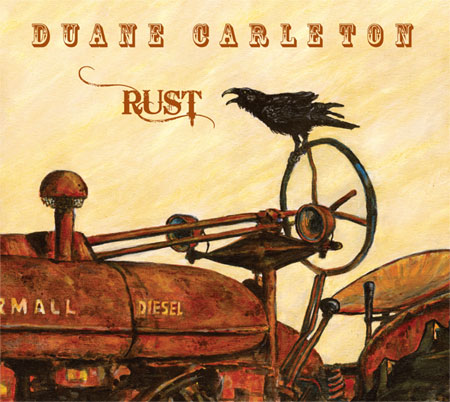
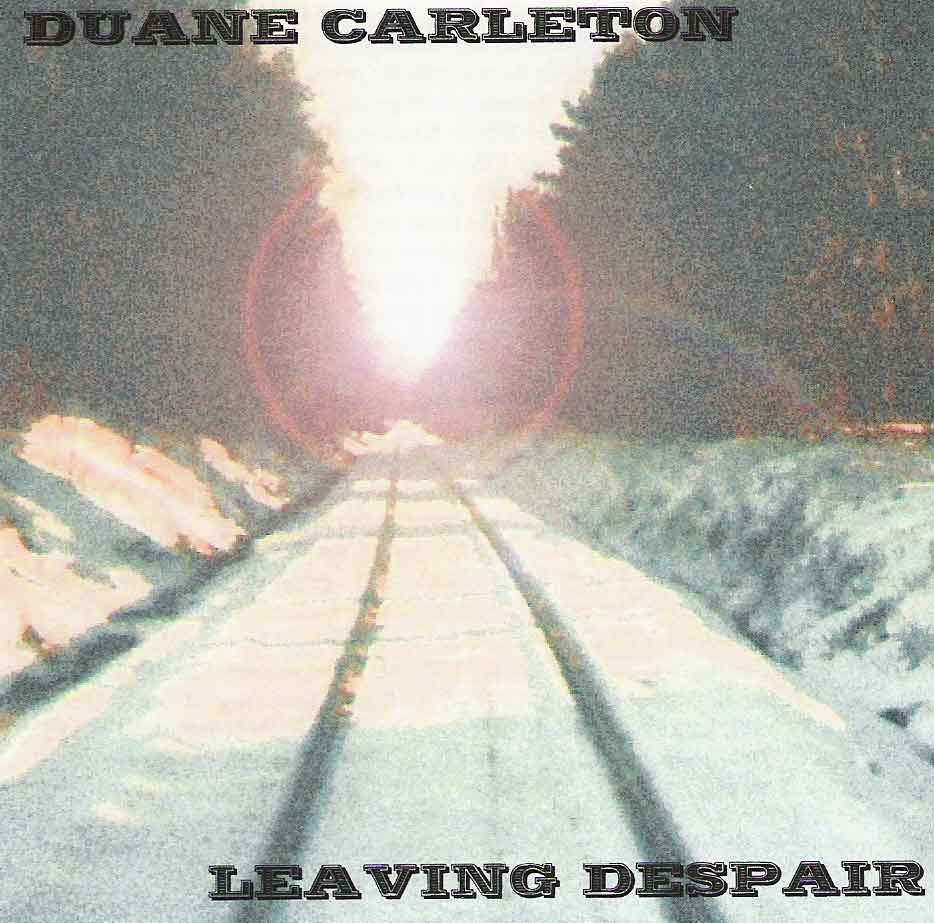
THE TIMES ARGUS September 2011 By Art Edelstein Duane Carleton, the prolific singer-songwriter-musician from Rutland County, recently released his newest CD, "Rust" and it continues to advance a career that is known for intelligent songwriting, fine singing and energetic guitar playing. "Rust" is an album of his most recent albums, "Once Lost, Then Torn Down" and "American Boy". In this trio of work, Carleton continues to write about rural America, the problems of working people, dying town, and an ebbing farm economy. The 14 titles on "Rust" easily categorize the work here. From "In a Nowhere Town" through "Rust," "This Ghost Town Knows My Name," "You Can't Lose What You Never Had," "Rain on the Farm," "Broken," "Runaway Romeo," "Leaving Despair," "Until You Come Around," "All I Ever Wanted," "Pushing the World Away," "God Never Needed a Gun," to the closing "Tonight," Carleton weaves a story of the bleak and wanting in America, the stresses that erode relationships and the middle class. This is not a bad thing. With subject matter like this, what could be a totally morose and downer album is really quite entertaining. This is to Carleton's credit as a writer and performer. The lyrics are emotive and he's a good storyteller. The stories are compelling and he doesn't pound you on the head with polemics. Carleton is a fine musician who knows when to use an acoustic guitar, as in "Rain on the Farm," and when to wail, as in the instrumental section that follows. His vocals never whine nor sink below the mix into verbal mush. One can actually understand what he is singing about. Carleton also has a fine voice in a mid-range baritone with a bit of nasal smokiness for flavoring. Most of the tracks find Carleton accompanied by a solid band. Jerry Dubeau on keyboards, Jeff Poremski on bass, Gary Spaulding, Bob Boyer and Jim Parvis sharing drum work are all solid players. The band members seem to have fully absorbed Carleton's soft rock/country/acoustic sensibilities. Laura Molinelli does a fine job in the album's one duet number, the acoustic "Leaving Despair," a nice word play on place/feeling. The album's highlight for this writer is the most overt political song, "God Never Needed a Gun." It's a guarantee this song won't get much airplay due to it's political message. I'm reminded of Bob Dylan's early masterpiece, "Masters of War," when listening to this track. With this song I think Carleton has moved up several notches in stature. In his three most recent albums we heard a budding John Mellencamp, Bob Seger, Bruce Springsteen. With "Rust" add Steve Earle, John Prine and Dylan. We have a performer adept at all aspects of performance from singing to writing. We gave Carleton a Tammie award in 2007 for his work back then, and with "Rust," he again enters contention. "Rust" is a very satisfying listening experience as it's well produced, easy to listen to and intelligent in it's content.
SEVEN DAYS October 12, 2011 by Dan Bolles The
inside cover of Duane Carleton’s latest record, Rust, on the panel opposite
the album credits, presents a curious little statement. It reads: “Save a
farm. Eat a hamburger. Save two farms … make it a cheeseburger.” It’s a
funny line, in a mildly un-PC, bumper-sticker-wisdom sort of way. But it also
illustrates the veteran songwriter’s distinctly homespun worldview. Over the
course of his 14 albums, Carleton has forged a reputation as a working man’s
hero. He’s a blue-collar bard who fashions himself after the giants of the
genre: Bruce Springsteen, James McMurtry and, in particular, early John
Mellencamp — Cougar era, specifically. Heartland rock is well-traveled
territory, to be sure. But the New England-born Carleton comes by his
self-styled image honestly. And Rust is a ringing reminder that just because
it’s been done before doesn’t mean it can’t still be done well. As
a vocalist, Carleton boasts the requisite sandpaper growl one might expect from
a journeyman country-rocker. I wouldn’t be the first to draw a comparison to
Gov’t Mule front man Warren Haynes, and it’s apt. There are moments
throughout Rust that suggest he and Carleton were cut from the same cloth,
vocally speaking. But what sets Carleton apart from the majority of swaggering,
denim-clad tunesmiths is a surprising and sometimes profound sensitivity. From the opening cut, “Walking Woodlawn,” and throughout the bulk of the album, it’s evident that beneath Carleton’s gruff exterior beats the heart of a road-weary, lovelorn traveler. In particular, his searching ruminations in the title track are quietly beautiful, as he sings, “So go ahead, cry if you must. / Still, you’ll feel it. You’re losing your trust. / And everything is dying at the speed of rust.” Carleton is an equally impressive multi-instrumentalist, turning in tasteful performances on acoustic and electric guitars, lap steel, dobro, mandolin, baritone guitar, glockenspiel, and percussion. And his ace backing band, particularly pedal-steel whiz John Briggs, adds gorgeous atmospheric lines throughout. A common failing in electric Americana, especially with so many instrumental toys to play, is to overthink and overproduce arrangements, and that can smoothe out the rough-hewn edges that define the genre. Carleton suffers no such lapses. While not exactly sparse, his arrangements are purposeful and focused, allowing his considerable songwriting talents to take center stage.
CIDER MAG August 2011 By GEORGE V. NOSTRAND In my neck of the woods, Duane Carleton is one of the hardest working guys in the biz. His name is also synonymous with local music. Fiercely tied to his roots, Duane's pride in small town life rings through on "Rust" as it as has many of his albums. Duane is a tireless musical spokesperson for the blue collar worker, the farmer at the end of his rope, and others down on their luck. The tracks on "Rust" only add to his reputation as 'one of us" and his mystique as a small town hero. For those unfamiliar with Duane's sound, it's reminiscent of John Cougar Mellencamp or Bruce Springsteen. Call it Americana, Roots Rock, or Rock with a Country Twang - it's all American. With acoustic guitars strumming, electric guitars blazing, and the bass and drums thumping in the background, the music is also layered tastefully with pedal steel and a number of other stringed instruments. His studio musicians are clearly top notch as the music sounds seamless. With access to these musicians and experience under his belt, Duane has re-cut a couple of his older numbers, (and a couple of my favorites), on this cd, including "Runaway Romeo", featuring some nice piano work by Jerry Dubeau. Duane has a deep full voice. He never needs to scream or yell to get his point across. He knows how to both sing and tell a story at the same time in a way that will move you. His sincerity comes through as well when he sings of love, loss, and struggle. Just when you thought you had the album pegged as being somewhat one-sided in its sound, track #6, an instrumental, rolls up with a rollicking Pink Floyd-ish sidetrack. It quietly rolls back into what I would call Duane's signature sound. If you're looking for a new cd for your local music collection, pick up "Rust" by Duane Carleton. Just be warned, he has about 14 other cd's, and you might end up like me - having to build your own shelf for all of your Duane cd's.
THE RUTLAND HERALD AS I HEAR IT Duane Carleton stands poised to release his next CD, "American
Boy," at the Paramount Theatre as part of a new event featuring some great
local bands on Oct. 31. For a printable version of this review click here
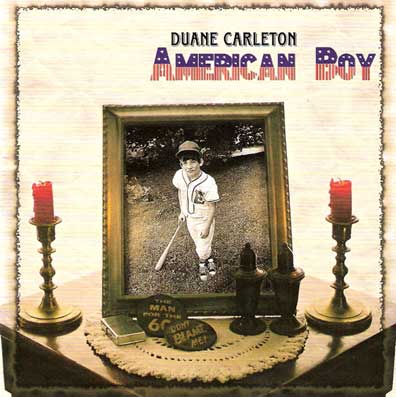
Duane Carleton’s ‘American Boy’: Rocking Middle America CD Review By Art Edelstein Arts Correspondent Duane Carleton from West Rutland was last year’s Tammie winner in the rock music category. In 2007 he released "Once Lost, then Torn Down," a spirited album of charged Middle America music. That album had some strong songs about real people, showing life in places like Vermont and other rural areas outside of the pop culture wonderlands of New York and Los Angeles. Recently, we received "American Boy," Carleton’s latest release. This 12-song CD continues his exploration of rock music in the vein of John Mellencamp, Bob Seger and Bruce Springsteen. Carleton seems to be channeling the above-mentioned trio of rock stars in this very listenable album. I would also add the likes of Duane Allman and Dickey Betts to the performers Carleton has incorporated into his own sound. Both are Southern rock-guitar greats. This is both a plus and a minus. It’s great to be compared to some of the best rock musicians this country has produced, but it’s also hard to create a unique sound when you sound so much like so many other performers. "American Boy" continues Carleton’s exploration of rock themes that hoe to a sound that eschews electronica and other "artificial" electric devices for the basic rock quartet sound of guitar, keyboard, bass and drums. While he plays electric guitar and there is electronic keyboard and bass on this CD the music is fairly straightforward, a basic menu of melodic songs light on complicated chordal complexity. His vocals vary from the highly charged on "Feel the Power" to the plaintive on "The Streets of Jericho," which also features former Band keyboard-wizard Garth Hudson on accordion. The band here is solid. Tim Lynch, Bob Van Detta and Boyer on keyboards, bass and drums respectively do a fine job. Carleton plays over 200 gigs a year so he has a lot of time to hone the songs on this CD. "American Boy" continues with some lyrics that praise small-town America, perhaps it’s the "real America" that Sarah Palin was praising in the recent presidential campaign. She might have done better at the polls had Carleton and his band opened for her speeches. With titles like "Feel The Power," "From a Broken Heart," "Living in a Lonesome Town," "Streets of Jericho" (is that the Vermont town?), "American Boy," "Take Me to Chelsea" (in Orange County?), "Havin’ a Good Time Tonight," "In A Small Town," "Rock and Roll Party Queen" and "Goodbye Rosalie," the listener gets a fine sampling of party songs and a few songs with more social content. This album, while great for dancing to, and technically and musically as good as Carleton’s previous album, doesn’t quite carry the water of "Once Lost, then Torn Down." I’d like to see this fine musician explore lyrical themes with more substance on his next CD. Still, if you like music that favors Middle America and Southern rock, albeit with a New England flavor, this album is worth a listen. Article published Nov 7, 2008 For a printable version of this review click here
VINTAGE GUITAR MAGAZINE - MARCH 2007 "ONCE LOST, THEN TORN DOWN" "Carleton is based in Vermont, but his songs celebrate the ideals and
feelings that records by John Mellencamp, Bob Seger, and Bruce Springsteen have
celebrated for the past 30 years. Not surprisingly, the music has a similar
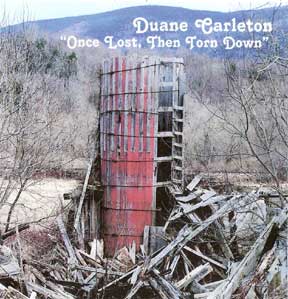
feel. It's easy to laugh at some of the rock and roll bands making hits these days, but hearing rootsy rock done this well should make you feel a little better." - JH For a printable version of this review, click here THE TIMES ARGUS TAMMIE AWARDS - DECEMBER 21, 2007 "Duane Carleton's "Once Lost, Then Torn Down" stands out as an oasis of highly listenable music in a desert of creativity. Carleton hails from West Rutland and he and his band are regular performers in southwest Vermont. He has 20 year's experience in the business and it shows. While he is not well known beyond Rutland County, he should be. Carleton's music shows keen insights into the malaise of American rural life as well as the reasons why people choose to live in rural states like Vermont. If musical comparisons are in order then Carleton's voice and style comes closest to that of John Mellencamp, Bob Seger and Bruce Springsteen. The music here churns and pulses through a variety of rock settings from blues-inflected songs to Southern rock, neo-country and acoustic ballads. Carleton's songs center on life in the mud lane of existence of rural poverty ("Small Town Heroes"), life in rural America ("Looks Like Home To Me"), the waning of American industry ("The True American") and Vermont's declining farming economy ("The Ballad of Horace Greene"). He manages to cover a lot of landscape eschewing maudlin rhymes, or cookie-cutter rhythms. He accomplishes this with a very good backing band that includes Bob Van Detta on bass, Ross Edmunds on drums and Tim Lynch on keyboards. Carleton handles the guitars. While I suspect this CD has not had much airplay it should be listened to, as an example of rock music with substance. THE TIMES ARGUS - MARCH 23, 2007 Duane Carleton transcends schlock rock March 23, 2007 By Art Edelstein Arts Correspondent With so many rock ‘n’ roll albums a wasteland of unresolved teenage angst, high-decibel electronic noise, undecipherable babblings from mock poets or otherwise poorly conceived and badly produced wannabe music, Duane Carleton’s "Once Lost, Then Torn Down" stands out as an oasis of highly listenable music in a desert of creativity. This singer-songwriter-musician has something valuable to say, and he delivers his message in a package most listeners to the rock genre will find very palatable. Carleton hails from West Rutland and he and his band are regular performers in southwest Vermont. His Web site boasts lots of gigs at venues in the Killington region. He has 20 years of experience in the business and it shows. While he is not well known beyond Rutland County, he should be. Carleton’s music shows keen insights into the malaise of American rural life as well as the reasons why people choose to live in rural states like Vermont. If musical comparisons are in order, then Carleton’s voice and style comes closest to that of John Mellencamp, Bob Seger and Bruce Springsteen. Mellencamp’s music has always had a Middle America twang; Seger has a solid rock voice and a clear notion of what ails the middle class. The Boss (Springsteen) has made a fortune extolling the virtues and pinpointing the foibles of the common man. Carleton shows similar sensibilities on this CD, which is not his first. He’s put in his time making self-produced singles and other albums and the time spent shows on this new recording. The music here churns and pulses through a variety of rock settings, from blues-inflected songs, to Southern rock, neo-country and acoustic ballads. For the effort, Carleton emerges as a musician with a variety of styles under his belt and this CD kept this reviewer’s interest throughout the 13-track album. Carleton’s songs center on life in the mud lane of existence of rural poverty ("Small Town Heroes"), life in rural America ("Looks like Home to Me"), the waning of American industry ("The True American") and Vermont’s declining farming economy ("The Ballad of Horace Greene"). He manages to cover a lot of landscape eschewing maudlin rhymes, or cookie-cutter rhythms. He accomplishes this with a very good backing band that includes Bob Van Detta on bass, Ross Edmunds on drums and Tim Lynch on keyboards. Carleton handles the guitars. This is a rock solid crew of rock musicians who are not prone to self-indulgence. The fast tunes sizzle and the slower ones ache.The production by Carleton and cohorts is spotless and tight. Self-produced rock music has a tendency to be flabby with too many performer hijinks and lots of self-congratulatory preening. Not this album. Carleton and crew lay down a groove that should be the envy of any band yearning for recognition in this crowded spectrum of the music industry. For his part, Carleton delivers his often-scathing lyrics in a clear baritone void of the screams, yells, howls or other histrionics heard from too many rock performers. He’s a really good singer and his voice sits high in the mix, just where it should be.The lyrics here are well thought out and potent. Carleton has a sharp eye for the way people in rural America live. "The people living in my home town know what it’s like when things don’t go easy/ they’re used to doing things the hard way where things can get a bit greasy. And those small town heroes got to shine on," are from "Small Town Heroes," the opening rocker that exemplifies his sparse, but potent approach. These are lyrics with little waste and a charcoal image of the Vermont he observes around him. On the acoustic "True American," Carleton pays homage to the silent majority, America’s working poor, with words such as: "I am child from nowhere, no one is my name, got no place I need to go havin’ nothing is my shame/ every day when I wake up I do the best I can, I ain’t ashamed of what I am for I’m the true American."On "The Ballad of Horace Greene," which Carleton performs with just acoustic guitar, he writes of the dying dairy economy. "Horace Green was a good man, kind to lend a helping hand, came from a long line of farming men, it started when his great, great granddaddy bought this land/ Well some men’s dreams can fill up the sky/ others dream of just getting by/ Horace dreamed when his boy was a man he’d take up a family way and work this land/ So how many times can you kick a man down till you’ve kicked him in the ground, how much of his soul can you tear away till there’s nothing left to say?"This is fine tight writing. Carleton hasn’t performed in Washington County in recent memory and that’s too bad. As good a talent as his should be heard by a wider audience. Perhaps when ski season is over he and his band will take the drive north and share their talents with our part of Vermont. For a printable version of this review, click here THE RUTLAND HERALD JUNE 26, 2007 "ONCE LOST, THEN TORN DOWN" "There was a time before hip-hop, before grunge and alternative, back not that long ago, when we had this thing called ROCK! Duane Carleton hasn’t forgotten that era, and he serves it up Americana-style on "Once Lost, Then Torn Down." The album also has some moving ballads and some country influence to round things out. A guitar player of Duane’s caliber could easily write songs that centered around his blazing solos, but on "Once Lost" he seems to put serious work into the songwriting. Painting a picture of the struggle of rural America like only someone who has really lived here can, Duane clearly writes from the heart. I find that if you write about something that’s true and means a lot to you, it often hits home for others. The "characters" in Duane’s songs might just be your neighbors. I could hear any number of these tunes on any number of different radio stations. Pick up a copy and support local musicians. Duane’s website is www.duanecarleton.com, where you can find some cool footage too." -George V. Nostrand- For a printable version of this review click here SEVEN DAYS APRIL 4, 2007 "ONCE LOST, THEN TORN DOWN" " (Higher
Road Records, CD) For
a printable version of this review, click here THE RUTLAND HERALD - JANUARY 18, 2007 "This week I've been listening to Duane Carleton's new CD, "Once Lost, Then Torn Down." The first track, "Small Town Heroes," gets the nod for this week's Local Song in My Head. It's got that all-American rock sound that could be compared to the likes of John Mellencamp or Bruce Springsteen. He's also got a great video to boot." - George V. Nostrand For a printable version of this review, click here TAXI - INDEPENDENT A&R COMPANY - SEPTEMBER 2006 Review of the song "Small Town Heroes" "Memorable hook. I can hum this back ten minutes from now. (The) lyric communicates emotion to listener. Vocal does help to sell song. Good accessible subject matter. Great vocal tone and performance. Great title! Good repetition in the chorus as well." THE CASTLETON SPARTAN - MARCH 2007 "Duane Carleton is a legend in his own right. Carleton has been playing music locally for about 30 years. He plays Americana, but his music also has elements of folk and country."
VERMONT WOMAN - NOVEMBER 2004 Alyssa Todd of Big Heavy World is quoted as saying, " 'Leaving Despair' by Duane Carleton is probably the most beautiful, honest album I have ever listened to. He really captures life in semi-rural Vermont. With all the crap you can hear on the radio today it is refreshing to hear someone sing from their heart." For a printable version of this review, click here
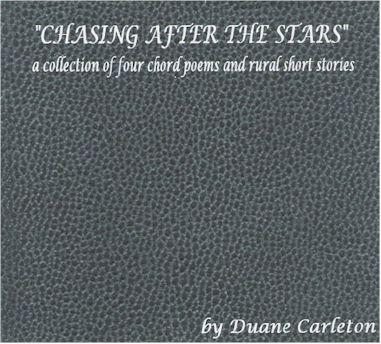
SEVEN DAYS May 5-12, 2004 Duane Carleton/"Chasing After the Stars" (Higher Road Records) West Rutland musician, composer and music producer Duane Carleton does it all on his self-produced and totally homemade recording, Chasing After the Stars. In addition to engineering, mixing and creating the artwork, Carleton plays guitars, bass, pedal steel, keyboards, mandolin and percussion - sometimes all at once. At his best, Carleton sings like a young Bob Seger. He writes catchy pop songs concerning his life and loves. The music here is full of riffs and chord patterns familiar to fans of the Eagles and a whole generation of "classic FM" semi-acoustic music. Whether or not you like the genre, it's hard to fault the musicianship in this project. Carleton has been performing for more than 20 years and seems quite comfortable in front of a microphone as well as behind the console. Chasing After the Stars is a professional-sounding recording that could have come from Nashville as easily as from Rutland County, even with the "Vermont-specific" references in the lyrics. by Robert Resnik For a printable version of this review click here
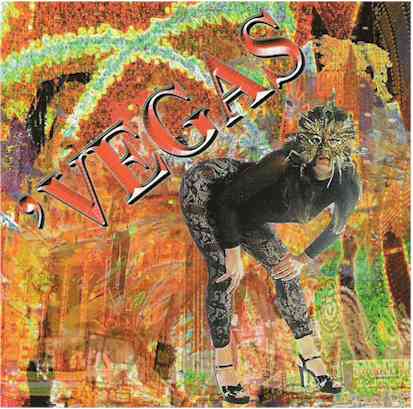
APRIL 14-MAY 4 1999 VERMONT REVIEW 35 TIN PAN ALLEY/'VEGAS (Higher Road Records 1997) Vermont natives' Tin Pan Alley are at it again with their pulsating guitar/hard driving rock backed with original sound and lyrics. This time with their latest release, 'Vegas. The band consists of Duane Carleton: Vocals, Guitar, Steve Mulholland: Bass Vocals, Bob Boyer: Vocals, Drums, Percussion, Mandolin. Track one starts the cd with the impressive "Primadonna", explosive guitar beats to begin matched with catchy lyrics about an obvious madonna of the '90's. The song also evokes the agressive rythym work provided by Mulholland and Boyer. "Wading In The Sun", "King Of Me", and "I Am", three Alley tunes fans will definitely identify, "Wild Dogs" takes you on the softer side of the Alley repertoire. The song is lyrically sound, with an uptempo acoustic melody, featuring a piano and cello. "'Vegas" "Bright lights, big city-shine no more-my gift my pity-your time has come and gone" finishes with an excellent jam. The cd ends with the rocking "Faeries Wear Boots". The cd implements passion for the simple structure of the '80's/90's classic style rock. Influences throughout the cd range from Sabbath to Haynes. In this day of multi mix styles, it's nice to hear something real that's well composed. 10 tracks 35 mins. For a printable version of this review click here. JULY 1998 MAGAZINE MAGAZINE This Rutland Vermont trio (plus 3) kicks some serious ass on this explosive sounding compact disc entitled 'Vegas. Elements of King's X, Metallica, Alice in Chains and Ritchie Blackmore shimmer through these eight originals and two covers ("Wild Dogs" and Black Sabbath's "Faeries Wear Boots") that feature torrid guitar work, intense drumming, blistering bass lines and over the top vocals doled out in equal parts by guitarist Duane Carleton and drummer Bob Boyer. Bassist Steve Mulholland's backup vocals are also a solid compliment to the entire power trio image. Best cuts include the opener "Primadonna", "King of Me", and "2 Mary's". A formidable group at the top of their game. Good Stuff! by Douglas Sloane For a printable version of this review click here.
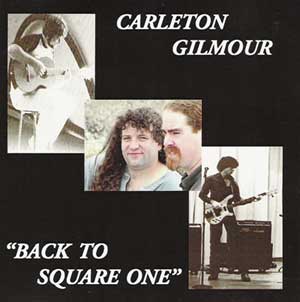
THE FOLK TIMES - January 2007 CARLETON/GILMOUR Jim presents new sounds and grooves using multiple and partial capos and alternate tunings. His lyrics, sometimes veiled, sometimes chillingly frank celebrate the mystery of life. Duane's songs rock and sway with an old country and modern country sensibility and span deeply personal roots rock and alternative acoustic. SEVEN DAYS 2005 in a review for Johnny Azer's "Brand New and Lost Tracks" "Duane Carleton lays down some particularly incendiary guitar work on the punky "More Than Ever"
|